
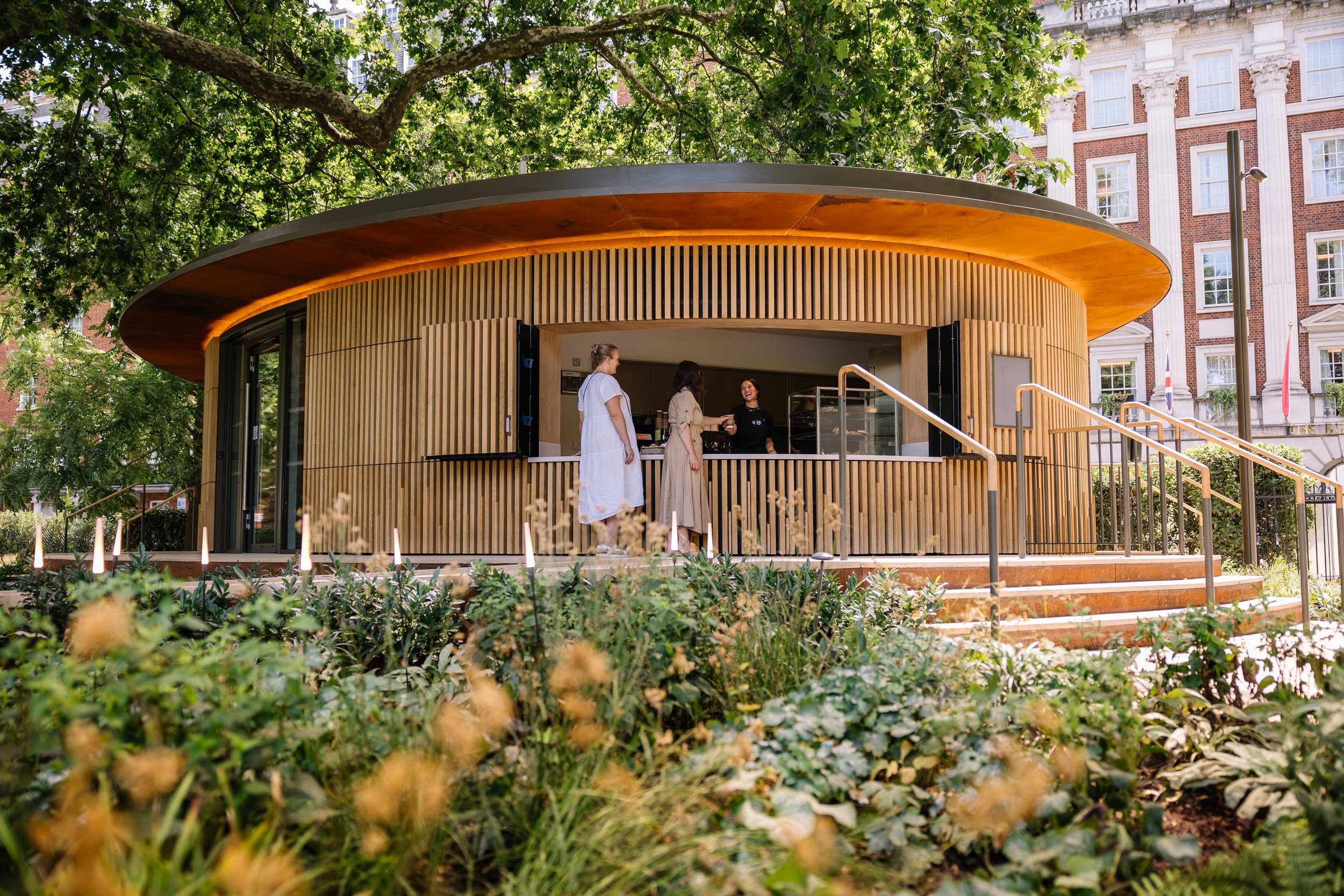
Grosvenor Square Gardens: Meeting the Needs of Future Generations
Read how Grosvenor Square prioritised long-term value through urban greening
The challenge
Grosvenor Square is London’s second-largest public garden square and has been redeveloped only four times in its 300-year history.
Recognising that the garden could do more for both people and nature, Grosvenor reimagined the space in response to community needs and the climate emergency.
The result is a resilient, inclusive and multifunctional landscape designed to serve a busy 21st-century city.
The Solution
As a long-term privately owned business, Grosvenor was able to take a future-focused approach, reimagining the square to meet both current and emerging community needs. In order to do this, Grosvenor and partners:
Engaged more than 7,000 residents, workers and visitors over nearly ten years to create a design shaped by the community.
Took a long-term approach, designing the square to respond to future social and environmental challenges.
Restored soil health by reversing decades of compaction through aeration, creating the conditions for a healthier, more resilient landscape.
We'd love to hear your feedback, as well as any relevant research, insights, or lessons learned that could help inform our approach.
Partners:
Grosvenor, Contractor – Maylim, Design – Tonkin Liu and BDP, Ecology – Nigel Dunnett
Green Infrastructure Type:
Garden Square
Ecosystem Services provided:
Biodiversity Net Gain, Ecological Connectivity, UHI reduction, Carbon reduction, Water Management, Cooling and Shading, Physical Activity, Air Quality, Mental health, Social Interaction
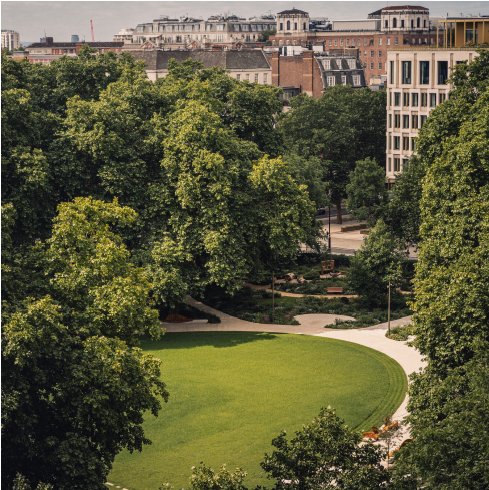
Photo Credit - Stuart Bailey. Location - Grosvenor Square
The Impact
Valuing nature and ecosystem services, this regeneration represents the largest private investment in public green space in the West End in a generation. Since opening in summer 2026, the garden has begun to establish and grow, becoming more resilient with age. We will continue to monitor biodiversity and other ecosystem services to evidence its environmental and social benefits.
150,000 new plants and bulbs are now establishing and growing. These have been selected for their climate resilience and their ability to provide year-round interest. For example, planting near the 9/11 Memorial comes into bloom each September.
44 new trees provide additional shade and cooler spaces, offering respite for both the community and wildlife during hotter summers.
Two new water habitats create valuable space for wildlife in central London.
The landscape can now soak up 1.4 million litres of water, helping to improve the climate resilience of the square and surrounding streets during more frequent thunderstorms.
To help people connect with nature, we have built an education centre and café, run by the London Wildlife Trust and funded by the Westminster Foundation, providing opportunities for children and adults to learn about nature and biodiversity.
Reflecting what is valued by the community, we have also created a safer and more accessible space, with CCTV and improved lighting, much-needed public toilets, water refill points, more places to sit, and new play areas for children.
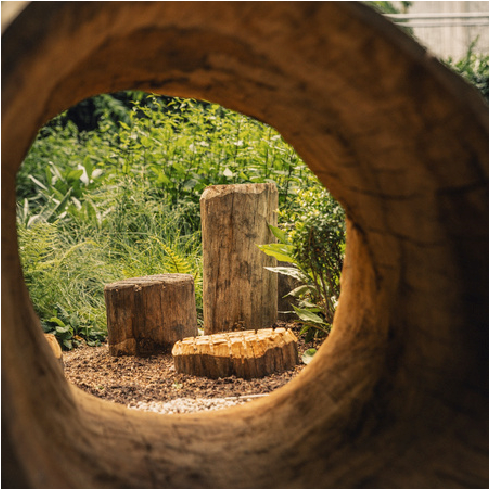
Photo Credit - Stuart Bailey. Location - Grosvenor Square
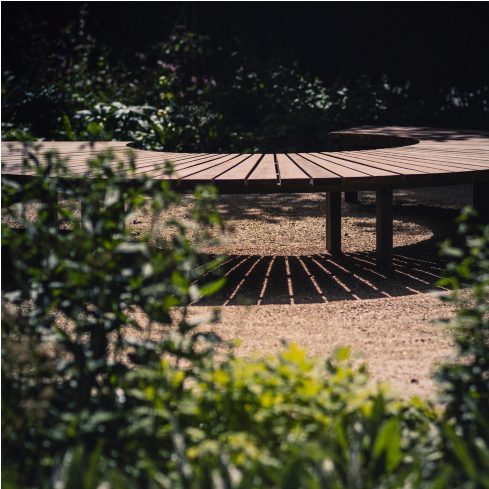
Photo Credit - Stuart Bailey. Location - Grosvenor Square