From Rooftop Terrace to Urban Oasis: Creating Space for Nature in Central London
Read how the Howard de Walden Estate transformed a rooftop terrace into a sanctuary for people and planet
The challenge
In central London, space for nature is limited, and small urban terraces can be challenging to transform into valuable habitat. This challenge is intensified by the urban heat island effect, which contributes to higher temperatures across the city. As highlighted by the relentless heatwaves of 2026, urban environments are facing growing pressures from biodiversity loss, rising temperatures, more frequent and intense heatwaves, and prolonged periods of drought.
The Howard de Walden Estates saw an opportunity to transform 30m² of roof terrace into a resilient urban habitat, supporting pollinators, ecological connectivity and occupier wellbeing. The project began at 23 Queen Anne Street, where the habitat was rated ‘poor’ in the Biodiversity Net Gain (BNG) assessment.
The Solution
The Howard de Walden Estate and Oasis Plants, redesigned the planting scheme in line with Wild West End principles and informed by Biodiversity Net Gain (BNG) assessments and recommendations from Tetra Tech.
The scheme:
Seasonal planning to support pollinators, including alliums, sanguisorba, crocus, tulips and narcissi, to provide seasonal nectar sources.
Incorporated drought-tolerant grasses, evergreen species and climate-resilient perennial flowers to improve resilience and provide year-round habitat.
Enhanced biodiversity through a diverse planting palette that strengthened ecological connectivity and ecological value.
Included thyme, chives and fragrant Roald Dahl, geum, stipa tenuissima, erigeron, and sedum to create a richer and more engaging experience for terrace users
We'd love to hear your feedback, as well as any relevant research, insights, or lessons learned that could help inform our approach.
Partners:
The Howard de Walden Estates, Oasis Plants and Tetra Tech Ltd
Green Infrastructure Type:
Terrace and Roof greening
Ecosystem Services provided:
Biodiversity Net Gain, Ecological Connectivity, UHI reduction, Mental health and wellbeing
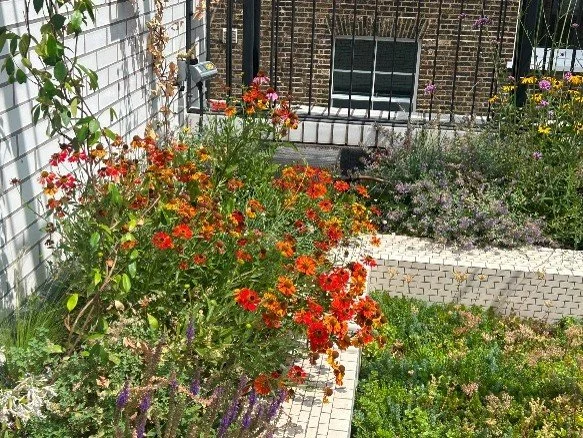
Photo taken from 23 Queen Anne Street showing the diversity of planting
The Impact
The project transformed the central London terrace into a thriving habitat for wildlife and people, supporting two of Wild West End's core objectives: demonstrating biodiversity and connecting people with nature.
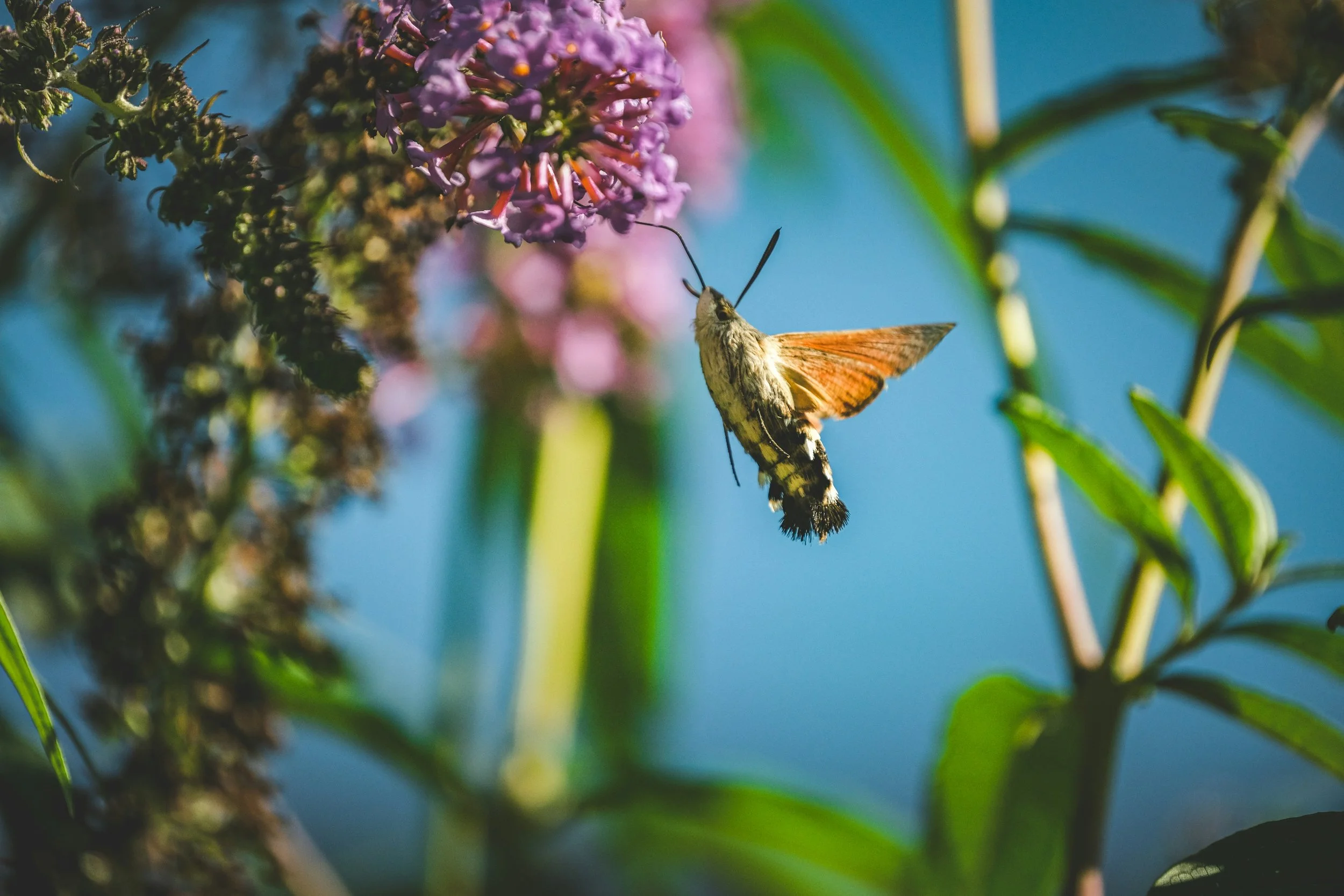
The impact is already evident, with western honey bees, cabbage white butterflies and a hummingbird hawk-moth having been recorded enjoying the new planting.
Other impacts to celebrate include:
105.94% Biodiversity Net Gain (BNG).
Increased habitat quality and plant diversity, supporting nature recovery.
Greater climate resilience through drought-tolerant planting.
An attractive, sensory-rich space that supports occupier wellbeing.
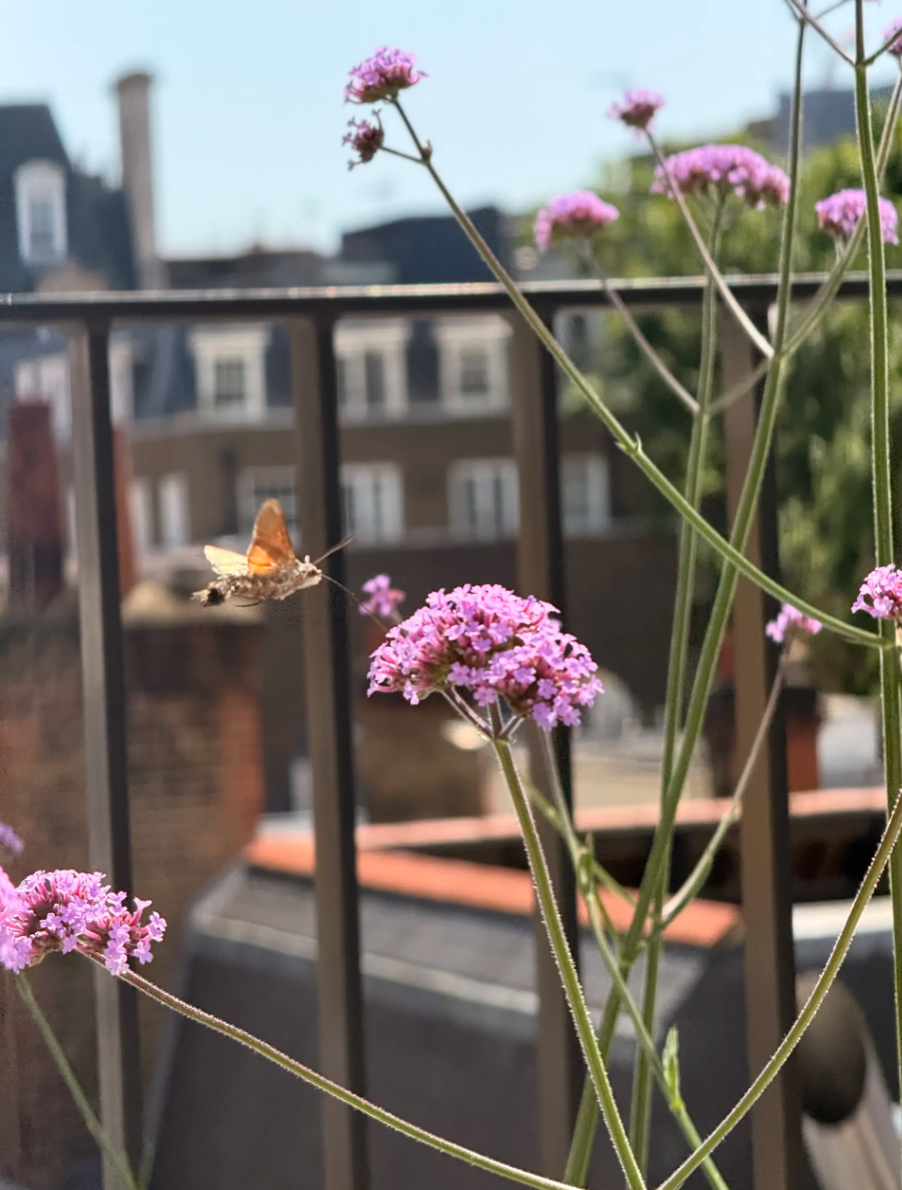
Hummingbird hawk-moth spotted on a Howard de Walden Estate roof terrace

The design for 23 Queen Anne Street new rooftop before construction took place