Measuring the value of nature: reflecting, learning and looking ahead
Whether it’s BNG, UGF or TCFD… measuring nature and biodiversity is no walk in the park. Read about how Wild West End has been exploring ways to recognise the diverse benefits of nature more holistically.
Wild West End is an alliance of property owners championing urban nature in the West End. Through our collective work, we aim to show what is possible when biodiversity is woven into the fabric of the city. While we are motivated to improve biodiversity for its own sake, we also want to demonstrate benefits of urban nature for people, the climate and nature.
In 2019, Wild West End collaborated with Arup to develop the Value Matrix, a guide to ensuring every green space in the West End delivers at least two of five key value areas - biodiversity, climate, microclimate, wellbeing and social. The Matrix helped partners adopt high standards on greening projects and even influenced local policy, being referenced in the Westminster City Council environment guidance on green infrastructure. However, the biodiversity field has rapidly changed in recent years. In response to developments in policy, legislation and best practice, as partners we set out in 2024 to update the Matrix.
The challenge
At the root of the project was a key problem: Wild West End partners found that industry metrics like Biodiversity Net Gain (BNG) and the Urban Greening Factor (UGF) were too limited to fully measure the value of nature in dense urban areas. These tools often focused heavily on area-based measurements and overlooked wider benefits such as wellbeing and climate resilience. Partners also felt that a clear framework for responsible supply chain management and good maintenance of green infrastructure was lacking.
Introducing the Value Matrix
The Value Matrix aims to:
Holistically measure the benefits of nature
Help users consider the supply chain impacts of green infrastructure projects
Provide practical guidance for high quality maintenance
The ambition was to create a shared framework that articulates best practice for green infrastructure in the West End - exceeding current urban greening requirements - and that enables partners to measure the success of their projects.
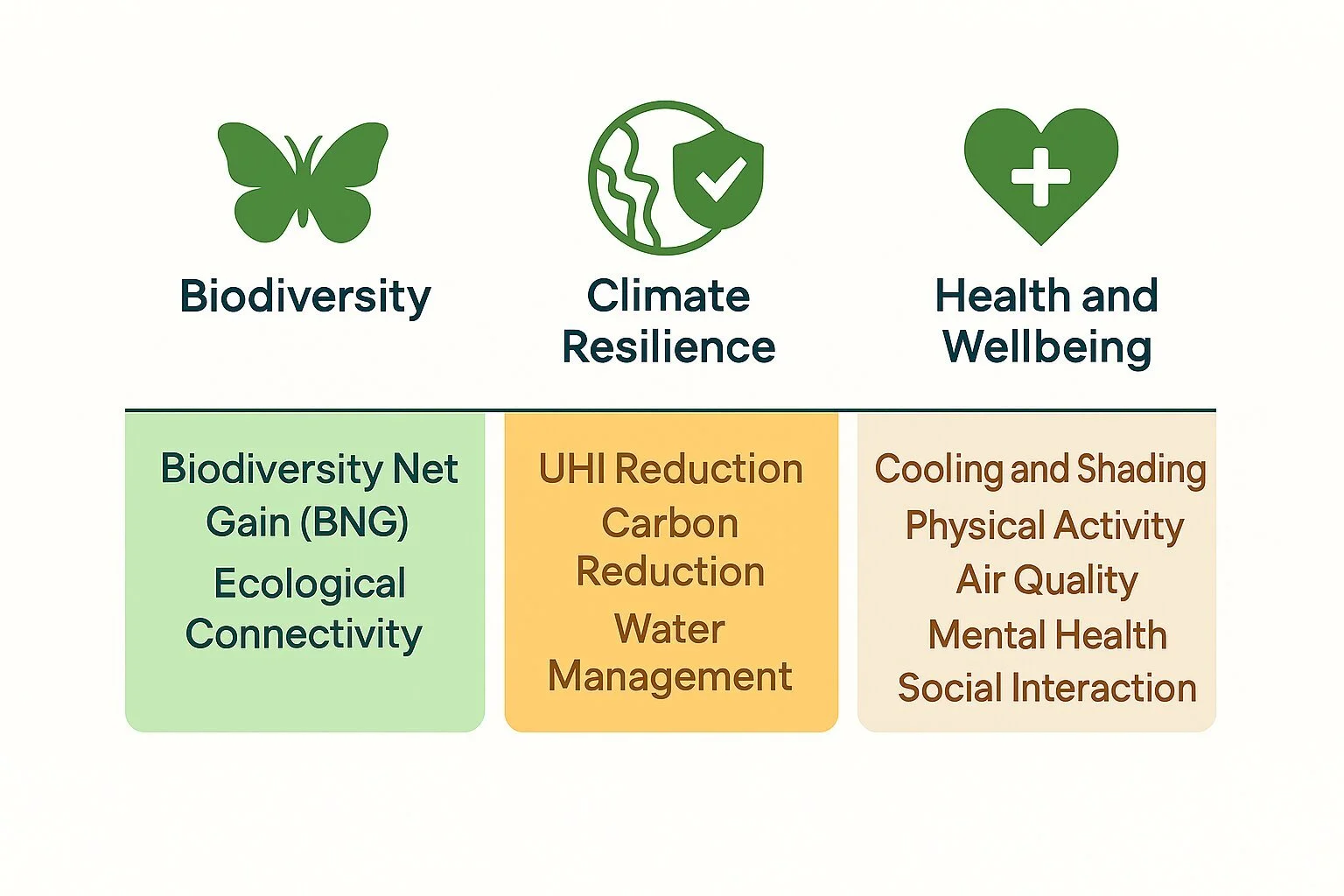
Developed collaboratively with ecologists Greengage, the new Value Matrix draws on a robust evidence base and offers detailed criteria for green infrastructure that provide holistic ecosystem services (or value) for nature, people and climate. The Matrix is split into 11 different green infrastructure types, allowing use on any size of project, from a window box to a garden square.
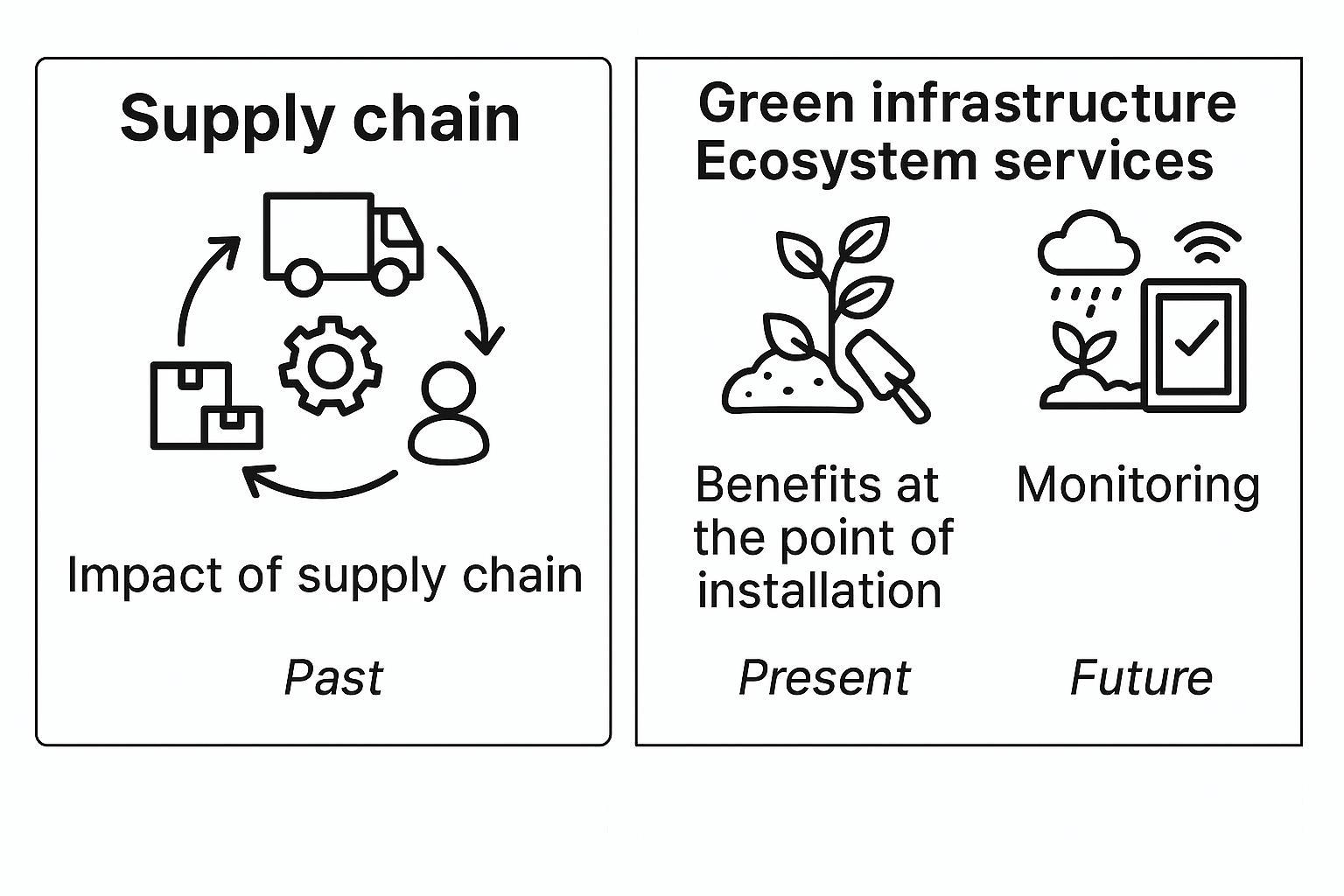
The Matrix is designed to cover the entire lifecycle of a green infrastructure project, providing not only design specifications, but also considerations to minimise supply chain impacts, and actions for effective management and maintenance. This was especially important for Wild West End partners given the challenges of successfully maintaining planting in an urban context like the West End.
The Matrix also includes a rudimentary scoring system, enabling partners to set a benchmark for what ‘good’ looks like on greening projects in the West End; and to understand performance compared to other Wild West End projects. The scoring is based on how many of the criteria have been incorporated into the project.
Our journey using the Value Matrix
Over the past year, Wild West End partners have been piloting the Value Matrix on a variety of green infrastructure projects to ensure high quality greening, supply chain planning and maintenance.
However, we recognise that the Matrix isn’t perfect. In our desire to capture every detail, the Matrix tool became complex and not the most user-friendly. Whilst the scoring system helps us to benchmark projects between Wild West End partners, it is not developed enough to be used beyond the partnership. The process has made us realise just how complicated it is to measure the value of green infrastructure, and the Value Matrix doesn’t yet solve this problem.
What comes next?
The Value Matrix project demonstrates Wild West End’s willingness to innovate, question established approaches, and push for more meaningful ways to value nature. We have learned a lot in the process and the journey to measure our impact doesn’t end here.
The Matrix has acted as a valuable reference point while Wild West End has been working with convening consultancy partner Bioregional and the London Wildlife Trust to clarify our long-term mission, vision and action plan for 2026 and beyond. Our new action plan will include a thorough review of the Matrix and other available tools to ensure we can effectively measure the value and impact of our urban nature projects. As part of the Influence pillar of the plan, we would welcome discussions with Westminster City Council, the GLA and other partners to collaboratively work on how to measure nature in a more pragmatic way.
We look forward to sharing more stories of our work as we strive to shape standards for high quality urban nature.
Get in touch if you want to talk more about how you measure the benefits of nature.
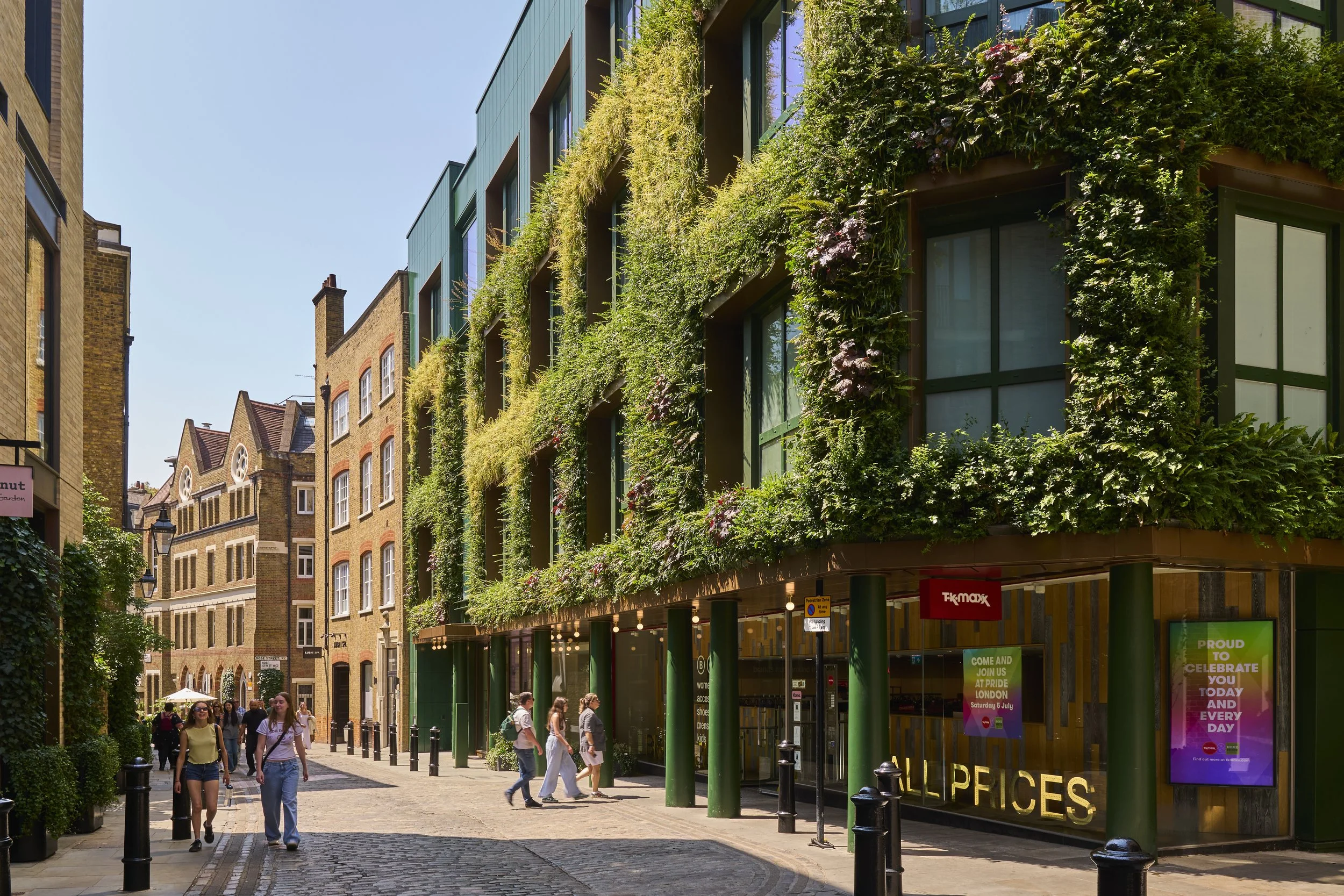
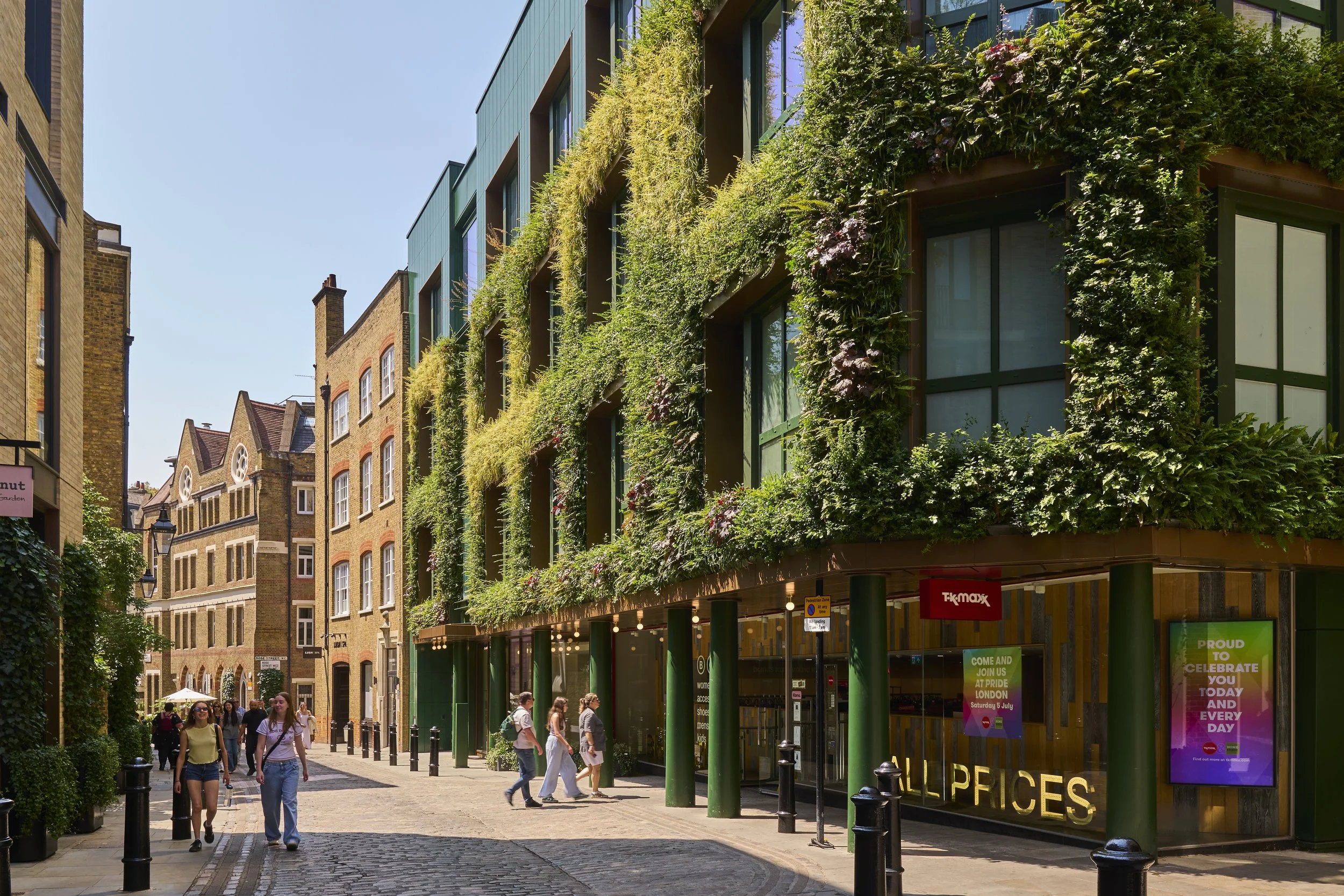
Shaftesbury’s living wall on Floral Street
Case studies
How Shaftesbury’s Floral Street green wall delivered benefits for biodiversity, air quality and wellbeing
How Howard de Walden’s refurbishment at Queen Anne Street provided habitats for wildlife, spots for peaceful reflection and rainwater harvesting
Read the Westminster City Council environment guidance on green infrastructure which takes inspiration from the Value Matrix